



Lesson 4: Effects of atmospheric pressure
Discover what atmospheric pressure can do to an empty bottle
Lesson 4: Effects of atmospheric pressure
Discover what atmospheric pressure can do to an empty bottle.
Effects of atmospheric pressure
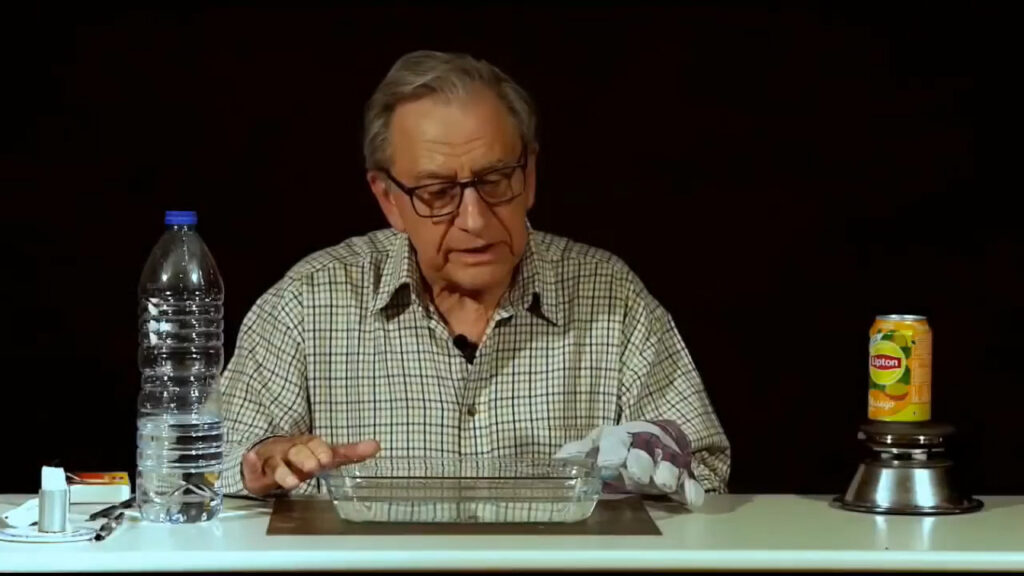
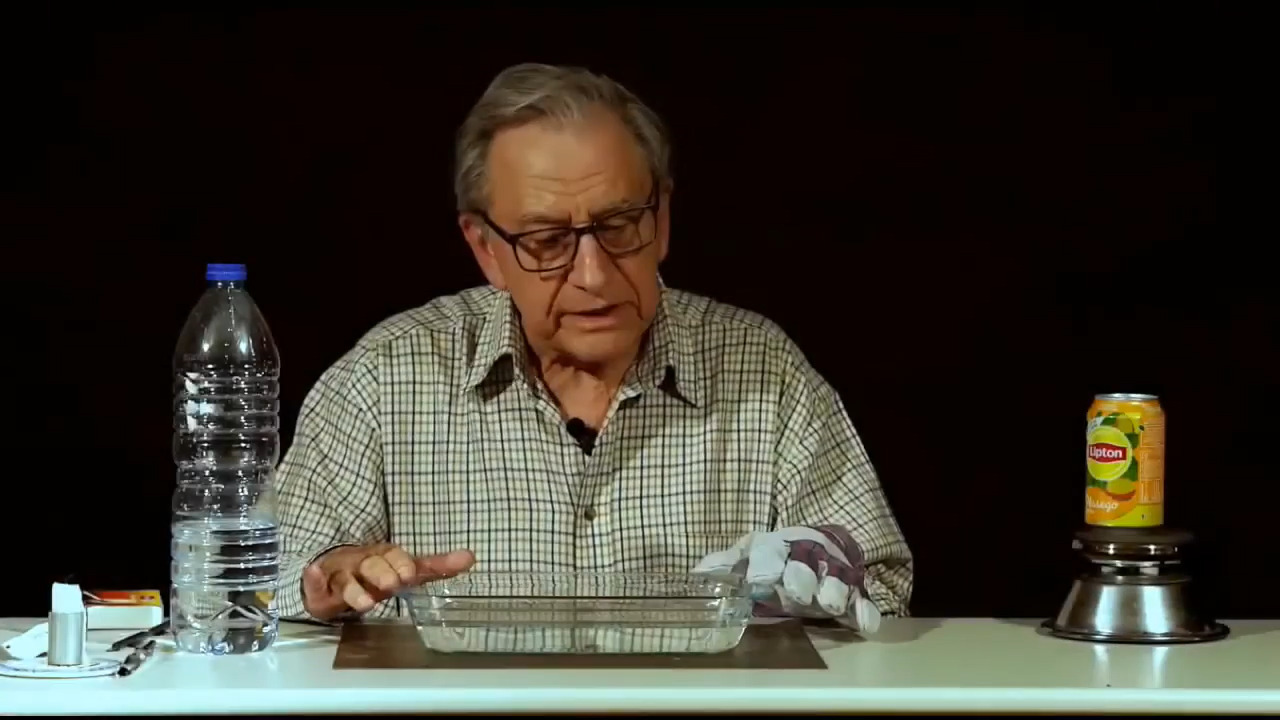
For this experiment we have a tray with cold water and an empty soda can with a small amount of water inside, heating on an electric plate that has just started to boil.
We are going to take the can and quickly invert it on the water tray.
What happened?
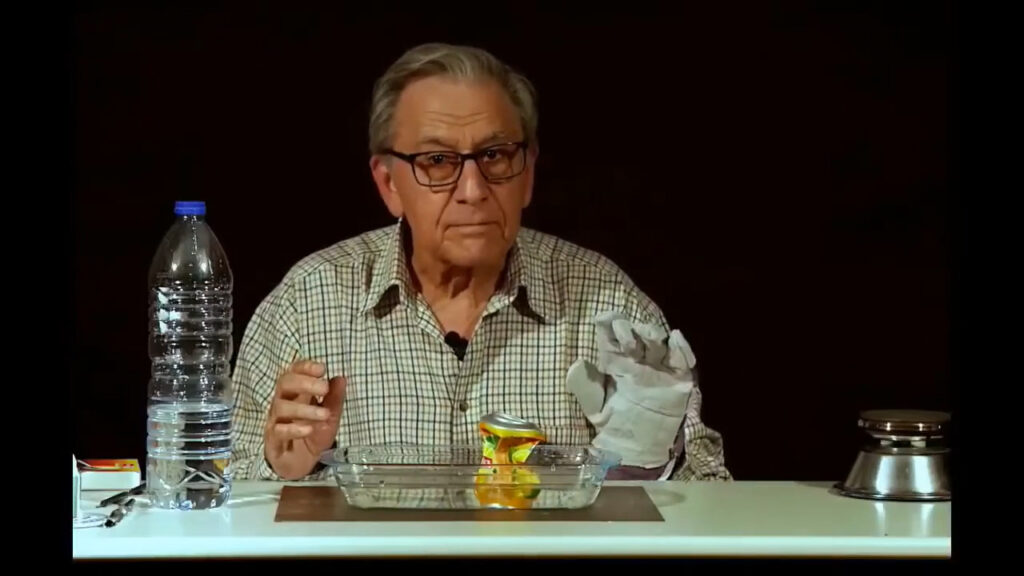
Why did the can collapse in such a dramatic way?
When the water is boiling, it creates water vapor inside the can. One interesting thing about water is that the volume of its vapor is about 1600 times greater than the volume of liquid water.
This means that:
- when going from liquid to vapor, the volume increases drastically;
- when going from water vapor to liquid, the volume decreases;
The result:
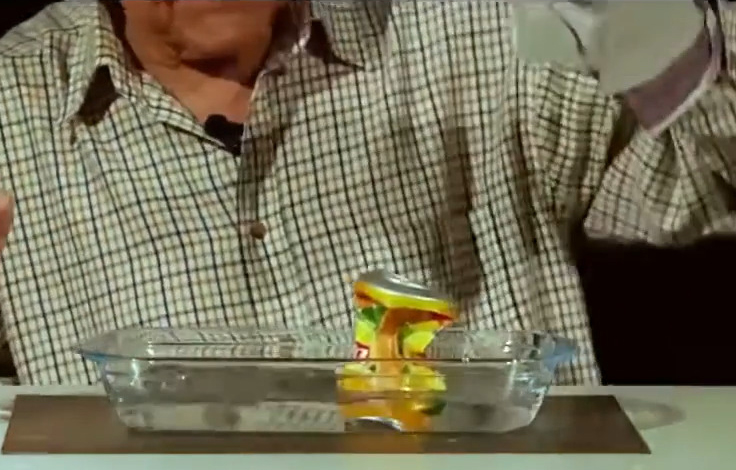
So, when we take the soda can with water vapor inside and invert it in the cold water – as the aluminium is a good conductor – it cools down quickly and a part of the steam that is inside condenses into droplets.
When condensing, it causes a depression inside the can that doesn’t give time to the water to get inside and the atmospheric pressure pushes the can, turning it like this.