



Lesson 3: White smoke and black smoke
When and why does a candle produces white smoke or black smoke?
Lesson 3: White smoke and black smoke
When and why does a candle produces white smoke or black smoke?
White smoke and Black smoke
Now let us make a small experiment to show you that in the candle flame there are two very different zones:
- a zone close to the wick where the vaporized fuel is produced, already shown in previous lessons;
- and another zone – the yellow area of the flame where the burning carbon particles become luminous and emit radiation when they reach high temperatures.
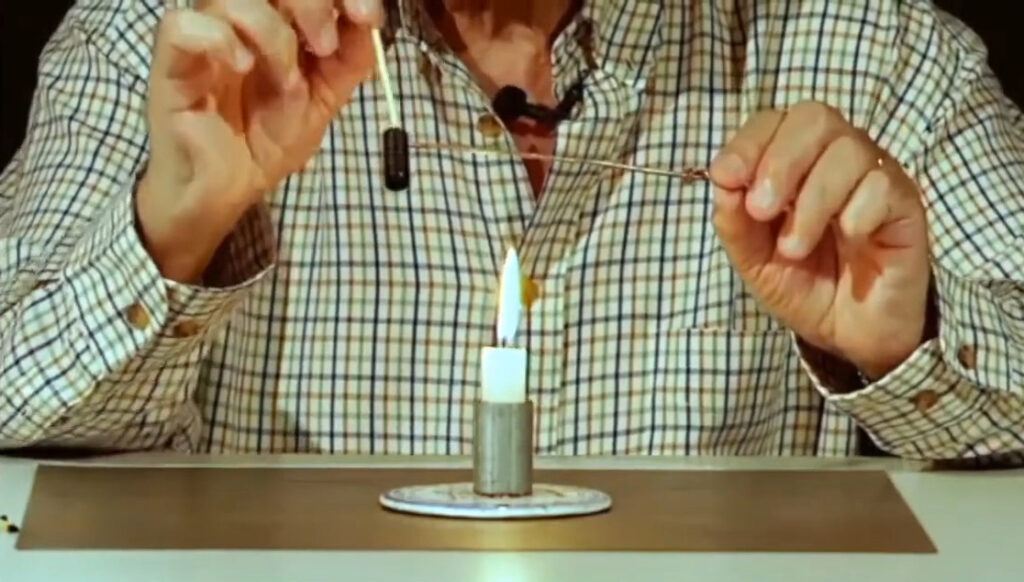
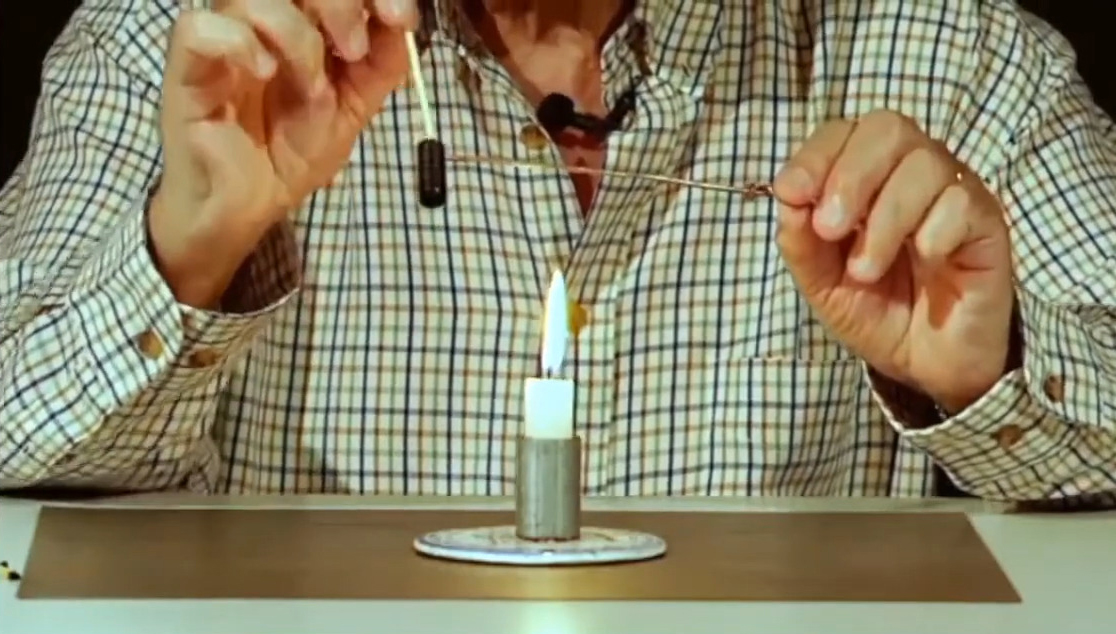
This object is a coiled copper wire tube making a little cylinder that is hollow. We will now lower this cylinder slowly so we can see the difference:
Understanding the difference…
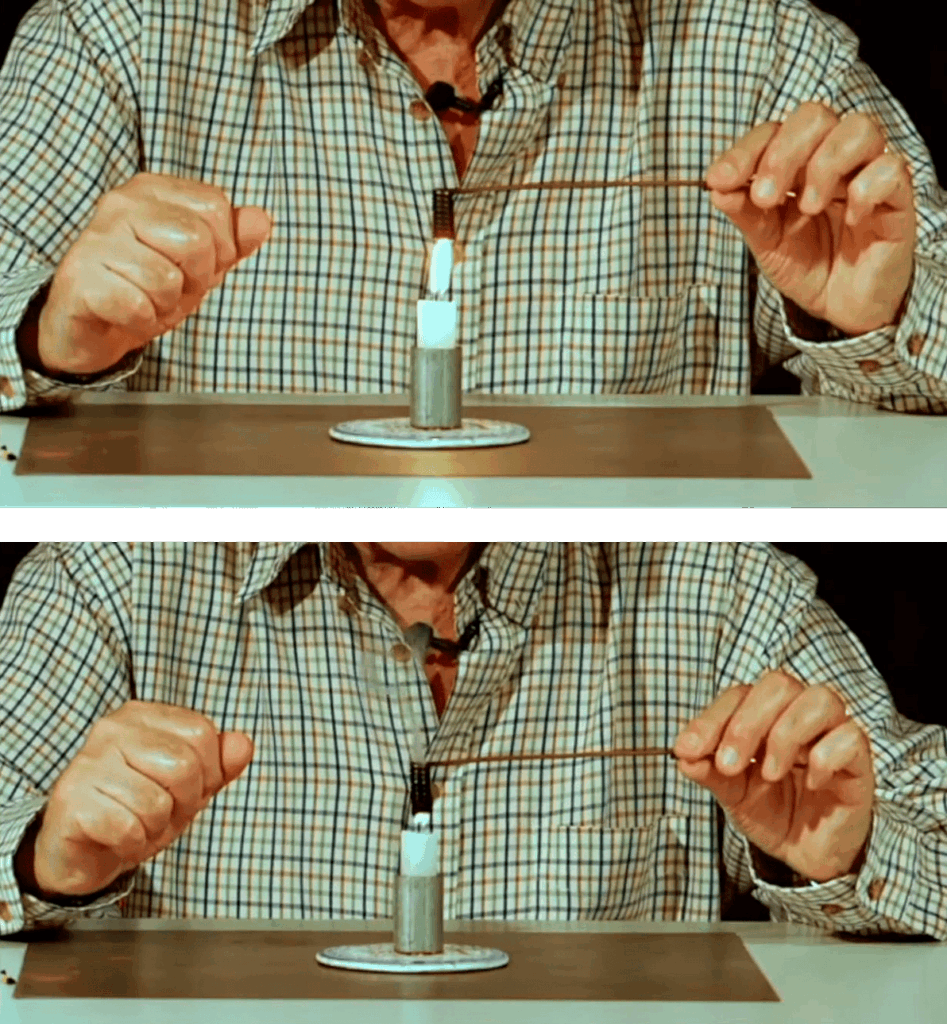
- In this situation, lowering the cylinder slowly, we have black smoke going out through the top.
- When we lower some more we now have white smoke going out through the top of the cylinder
- If we go up again we get black smoke again, if we go down, we get white smoke.
What does it mean?
Copper is a very good conductor, so when we lower this cylinder over the flame, it will steal heat from the flame, because the flame is inside the cylinder.
If it is at the top, where we have the burning carbon particles, the temperature suddenly drops and what it comes out is actually carbon. This is very similar to a diesel car when we accelerate and if the injectors are badly adjusted, black smoke will come out of the exhaust.
If we lower the copper cylinder a little more, it’s already in the area where the vaporized fuel is being produced, and the white smoke is in fact fuel, and we can even make it burn.