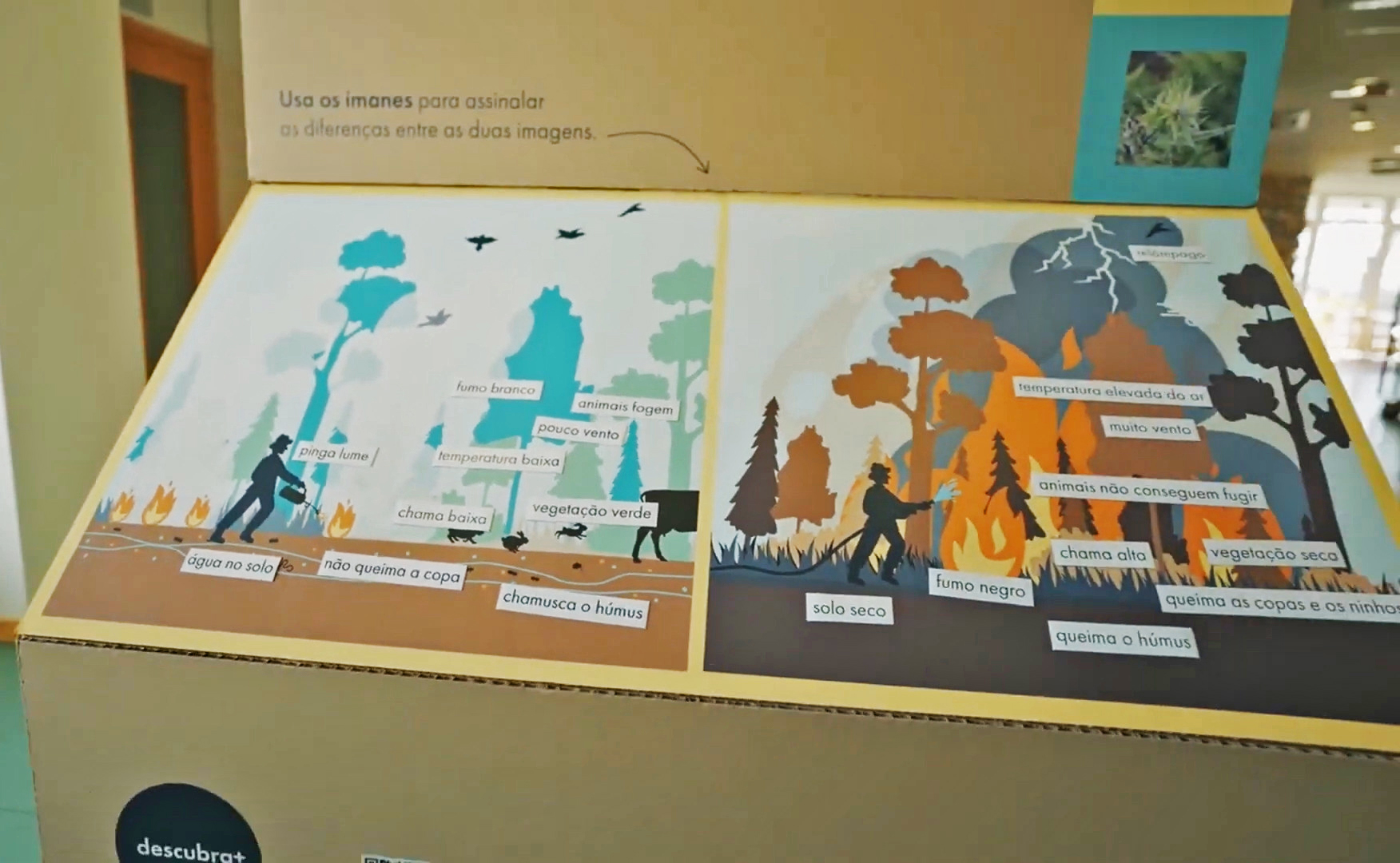


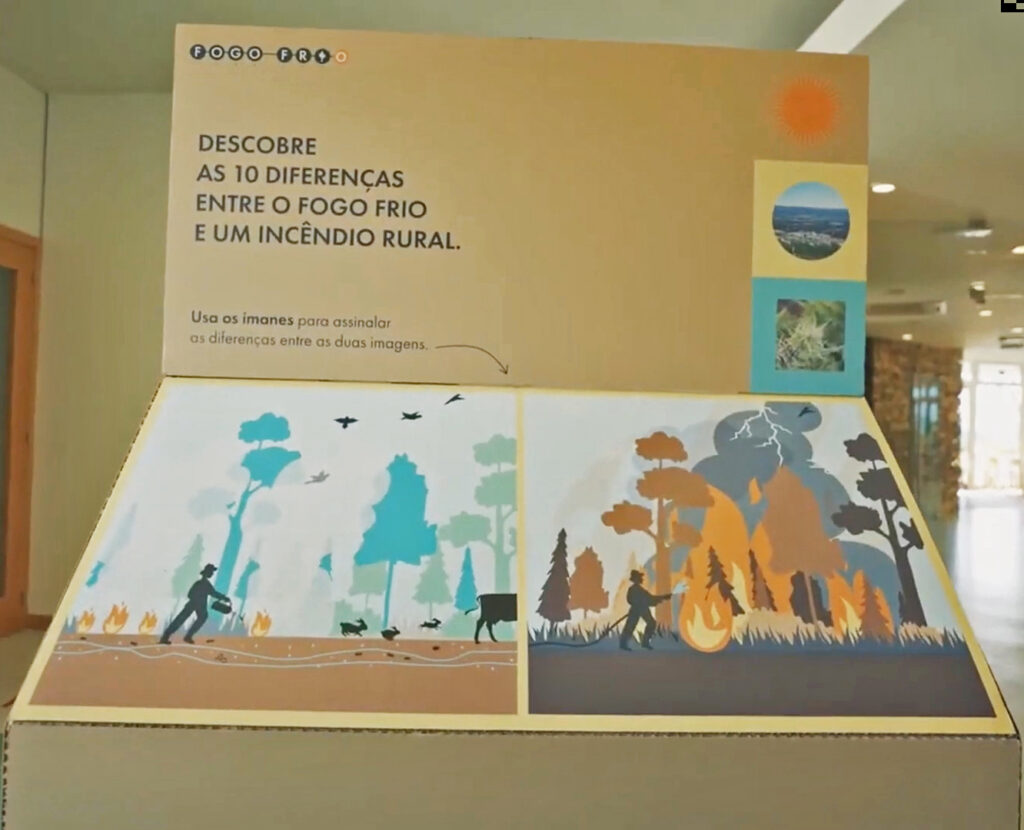
Lesson 7: Differences between cold fire and wildfires
Objectives of cold fire
Contains materials and challenges for students and teachers.
Lesson 7: Differences between cold fire and wildfires
Fire has always been a part of our daily life, through stories, traditions, events, practices, religion and several art forms.
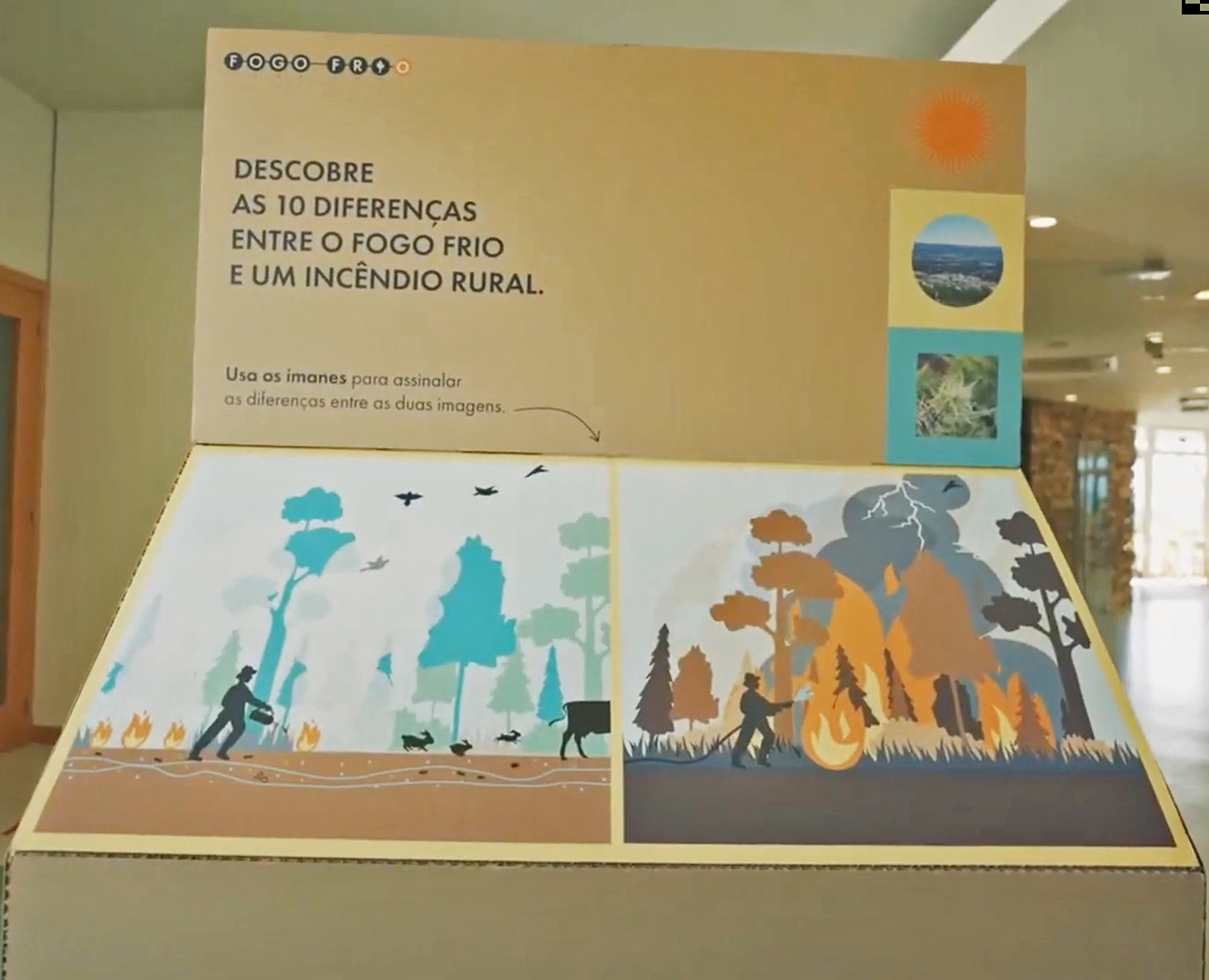
Differences between a Cold Fire and Wildfire
First, it’s important to know how each starts: Cold fire starts with the technician using the drip torch. If it was a wildfire, it could
start, for example, with lightning.
During cold fire the temperature is low, hence it is called cold fire and not hot fire. Wildfires usually occur when we have a high temperature.
Wildfires also occur when we have a strong wind. And in cold fire, as we saw earlier on the weather wheel, we want some wind, but not much.
And, as we are talking about cold fire that is used between autumn and spring, we will have water in the soil. Only when we have a lot of moisture in the soil can we then use cold fire as a technique to manage the landscape.
In conclusion:
If burning can have benefits, it can also have very negative effects, so we must burn with knowledge so that temperatures do not affect the soil too much, or roots, plants, microorganisms, etc. Cold fire has specific goals, and prescribed fire has them as well.